
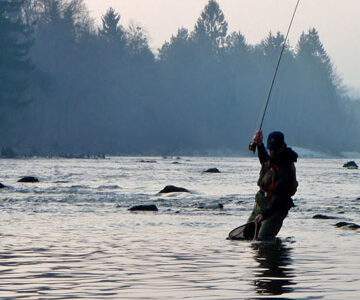
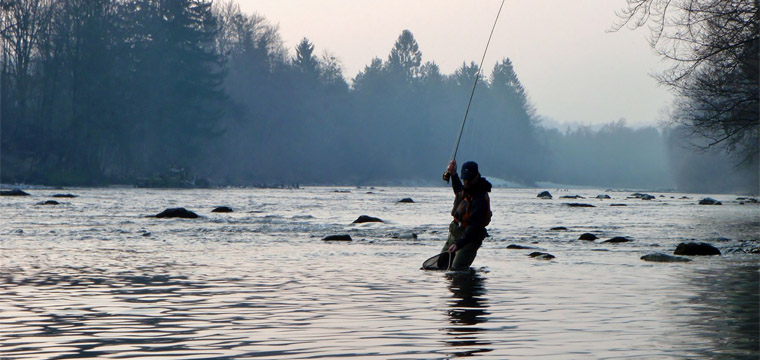
Steelhead fishing in Michigan is very popular, with fish starting to enter the rivers in March. Runs hit their peak in April and fishing can still be good up until the end of May. Some of the best steelhead rivers in Michigan are the The Pere Marquette River and Big Manistee River. Both rivers offer excellent steelhead adventures. The Pere Marquette is a smaller stream, with many nice pools that hold good numbers of fish. The Big Manistee River is a larger river and is best fished with a drift boat so anglers can cover more water in search of active fish.
The most common patterns that produce the majority of the trout, are egg sucking leeches, imitation egg patterns, nymphs and stoneflies. Caddis and mayfly nymphs have also been known to be effective, especially in low and clear water conditions. Early season fishing is best in the Pere Marquette River since it warms faster than the deeper Big Manistee River. Although the fishing can be exceptional on the Big Manistee, especially during the peak runs in April.
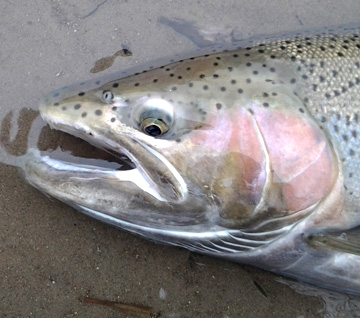 Another steelhead river in Michigan is the mighty Muskegon River. This river has a very healthy run of both wild steelhead and stocked fish and the fishing can be hot, especially during the middle of April. Egg patterns, wooly buggers, nymphs and stoneflies once again are the most popular patterns used to entice these feisty fish into striking. When the water is low and clear and the fish are spooky, smaller presentations, such as beads and small nymphs are most productive. Some of the more popular fishing areas include the tailwaters of the Croton Dam, and fishing the tributaries, namely the Hersey River, Cedar Creek and Little Muskegon River.
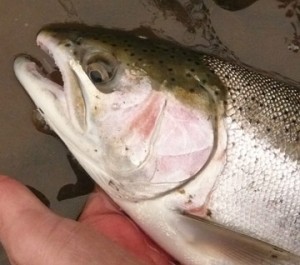
Flyfishing late into April and May, can be a great time for steelhead fishing, especially after periods of rain, since hungry spawned out drop-backs steelhead are aggressively feeding. This time of year don’t be surprised if you hook into a bonus brown trout, the colours of these spotted beauties can be breathtaking. Give steelhead fishing in Michigan a try, with so many rivers and places to fish, it’s an anglers paradise. Good luck and tightlines.
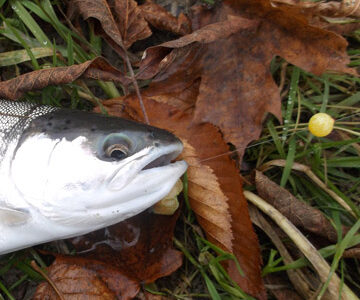
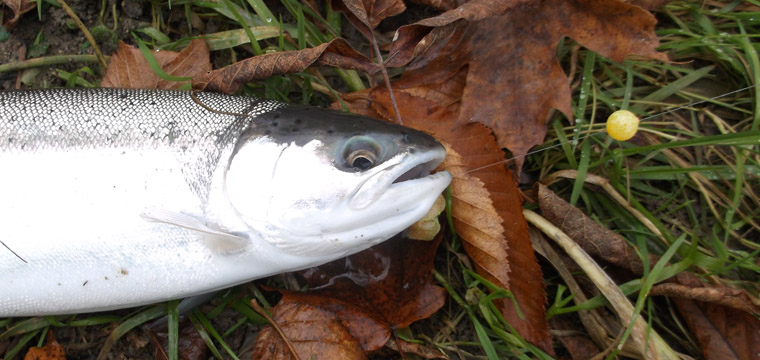
 Bead colour choice is also critical for a successful outing, there are so many colours and patterns to choose from making the right decision is daunting at times. Although experienced anglers will chose more natural colours in clear low water conditions and brighter more fluorescent colours when the water is stained or murky. Bead colour choice can also be river, creek or stream specific. In some systems, orange toned beads are more productive, while in others, yellow or white toned beads are better. Also don’t under estimate the pink, purple and green hues, on specific days these colours can be deadly, and will produce fish, when nothing else is working.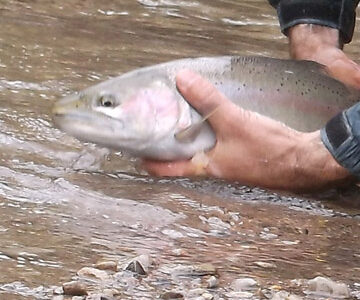
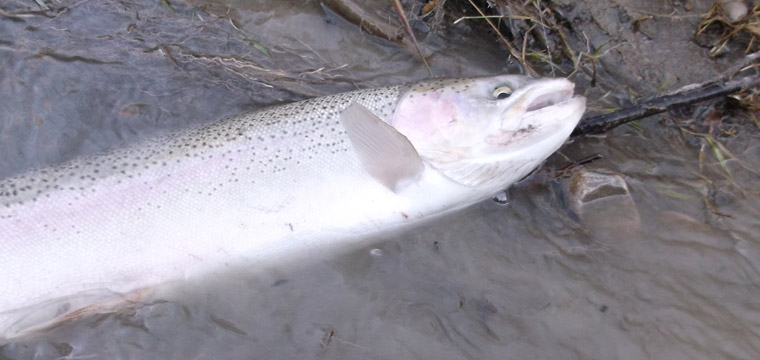
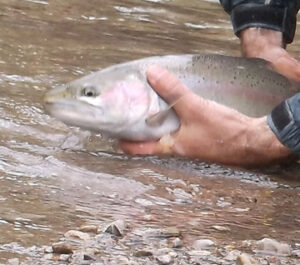 Drift fishing is also a popular technique for steelhead, and generally uses long noodle rods, center pin or spinning reels, a float, and small sharp hooks, sizes 12, 14, 16 and 18. Small split shot is added to a light leader, usually a few inches apart so the bait bounces along the bottom in a natural presentation. The most common bait used is roe, although worms can also produce good steelhead numbers.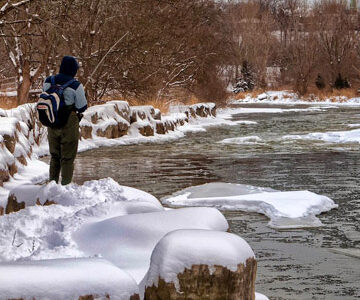
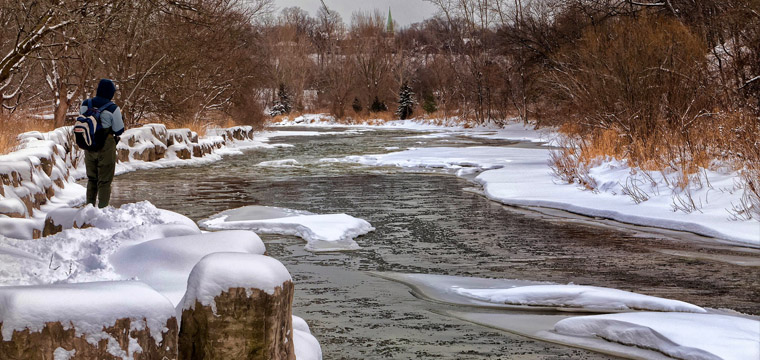
 Dress warm during this time of year, as it’s easy to get uncomfortable standing on the banks of a frozen river, the upside, you will find yourself fishing for less pressured trout as you may be the only angler on the river. Proper footwear with good traction is also a must, since creek and river banks can be extremely slippery and icy during the winter months.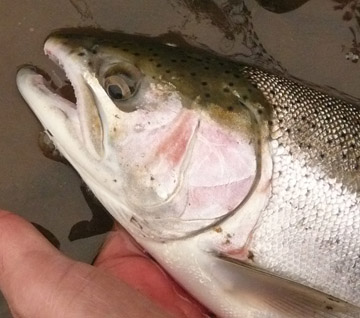
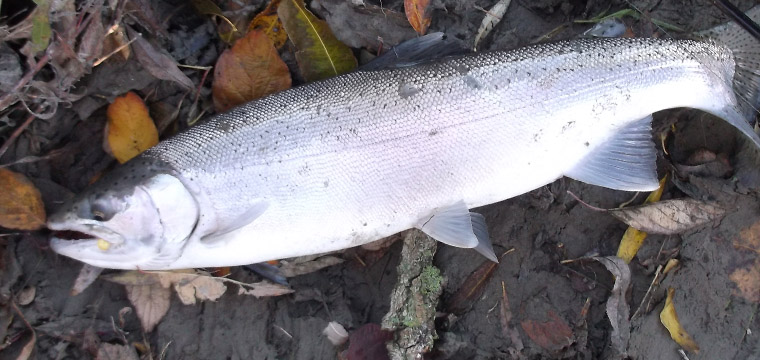 Hooking into a “screaming chromer” is thrilling. This refers to the steelheads tendency to run and jump once hooked and pull line giving your drag a real work-out. In spring, steelhead move up rivers and creeks that feed the Great Lakes is great numbers. Once the season opens anglers will crowd well know holding pools where action can been non-stop all day. Most use noodle rods, rigged with light line 4-6lbs and either a float reel / centre pin reel or spinning reel. Float fishing with roe is the staple here and has proven to be the top producing tactic. Although the use of flies, such as wooly buggers, stoneflies and egg patterns are also effective. The main rivers attracting attention are those near urban centers, namely the Ganaraska River in Port Hope, the Credit River in Mississauga, the Grand River, the Niagara River, the Nottawasaga, Saugeen and the Maitland river. Average fish are between 4-6 lbs, although fish in excess of 20lbs are caught annually.